




Get help fast → Join Discord • Prefer async? → Join r/ZooCode
Your AI-Powered Dev Team, Right in Your Editor
Zoo Code continues development of this project after the Roo team wound down active Roo Code work to focus on Roomote. Thank you to the Roo team for everything they built.
The core team is a group of developers who contributed to Roo previously and care deeply about this plugin. We will continue to make model updates, fix bugs, and release features, and we plan to listen closely to the community that made this plugin so special. Join us on Discord, Reddit, or open a PR or issue.
-Zoo Code Team
You can find a quick guide for migrating from Roo Code to Zoo Code in the Roo→Zoo migration guide. We plan to try and help users as they transition over, we have our Reddit and Discord for this exact support, so if you are having problems or if you have question, jump on and ask.
Zoo Gateway is live!
The gateway is a single endpoint for all providers, with one balance and per-request spending/usage breakdown.
Setup:
- Add credits: https://www.zoocode.dev/dashboard/credits
- Sign in from the extension.
- In the settings, select Zoo Gateway as the provider when creating profiles for different models
Usage and charges can be viewed in the dashboard.
Models: https://www.zoocode.dev/dashboard/models
- More OpenAI controls — use Fast priority mode with OpenAI Codex and choose higher reasoning effort for OpenAI-compatible models.
- More reliable providers and models — improved router metadata handling, Ollama model refresh, Bedrock proxy support, and Friendli reasoning controls.
- Smoother settings and developer workflows — settings now preserve unsaved edits, short terminal commands complete cleanly, architect plans use workspace-relative paths, and remaining user-facing Roo branding is updated to Zoo.
- Stronger task foundations — new task registry and semaphore-based scheduler primitives prepare Zoo Code for safer task coordination.
- Consistent provider architecture — provider identifiers and service-tier primitives are now centralized across the API, core, shared types, and webview.
- Security, dependency, lint, visual-regression, and end-to-end test improvements.
🌐 Available languages
- Generate Code from natural language descriptions and specs
- Adapt with Modes: Code, Architect, Ask, Debug, and Custom Modes
- Refactor & Debug existing code
- Write & Update documentation
- Answer Questions about your codebase
- Automate repetitive tasks
- Utilize MCP Servers
Zoo Code adapts to how you work:
- Code Mode: everyday coding, edits, and file ops
- Architect Mode: plan systems, specs, and migrations
- Ask Mode: fast answers, explanations, and docs
- Debug Mode: trace issues, add logs, isolate root causes
- Custom Modes: build specialized modes for your team or workflow
Learn more: Using Modes • Custom Modes
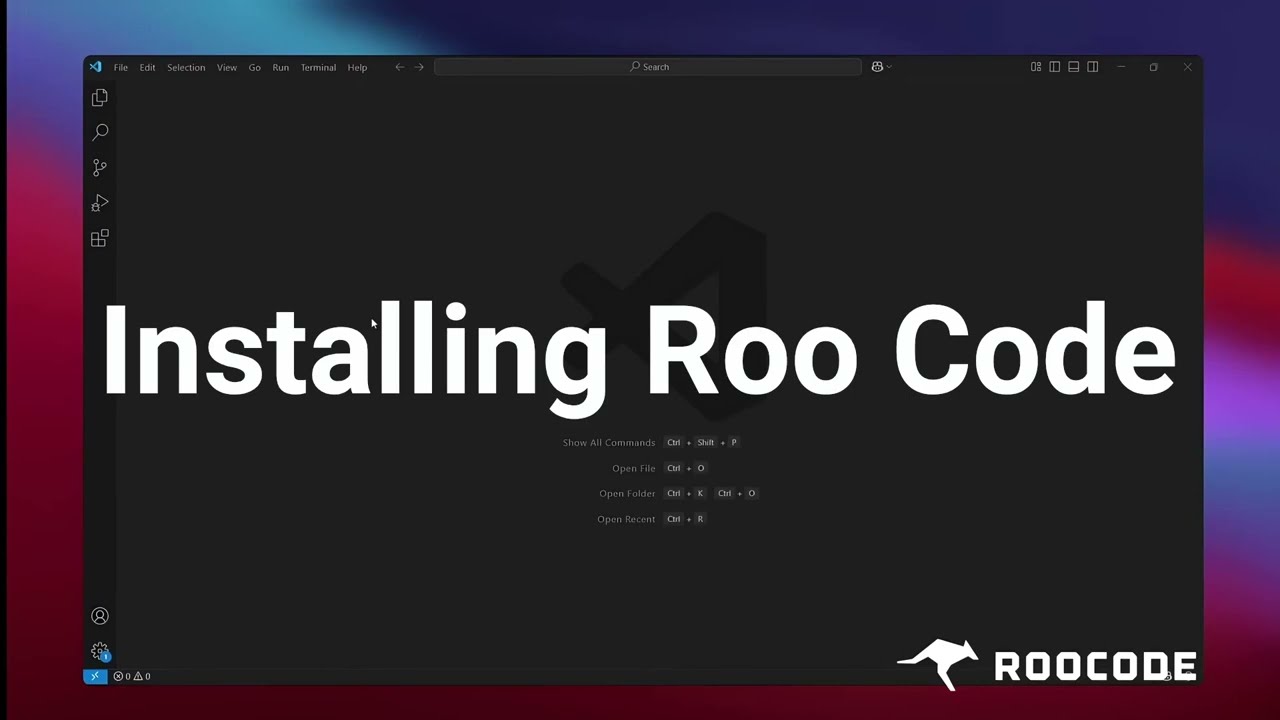 Installing the Extension |
 Configuring Profiles |
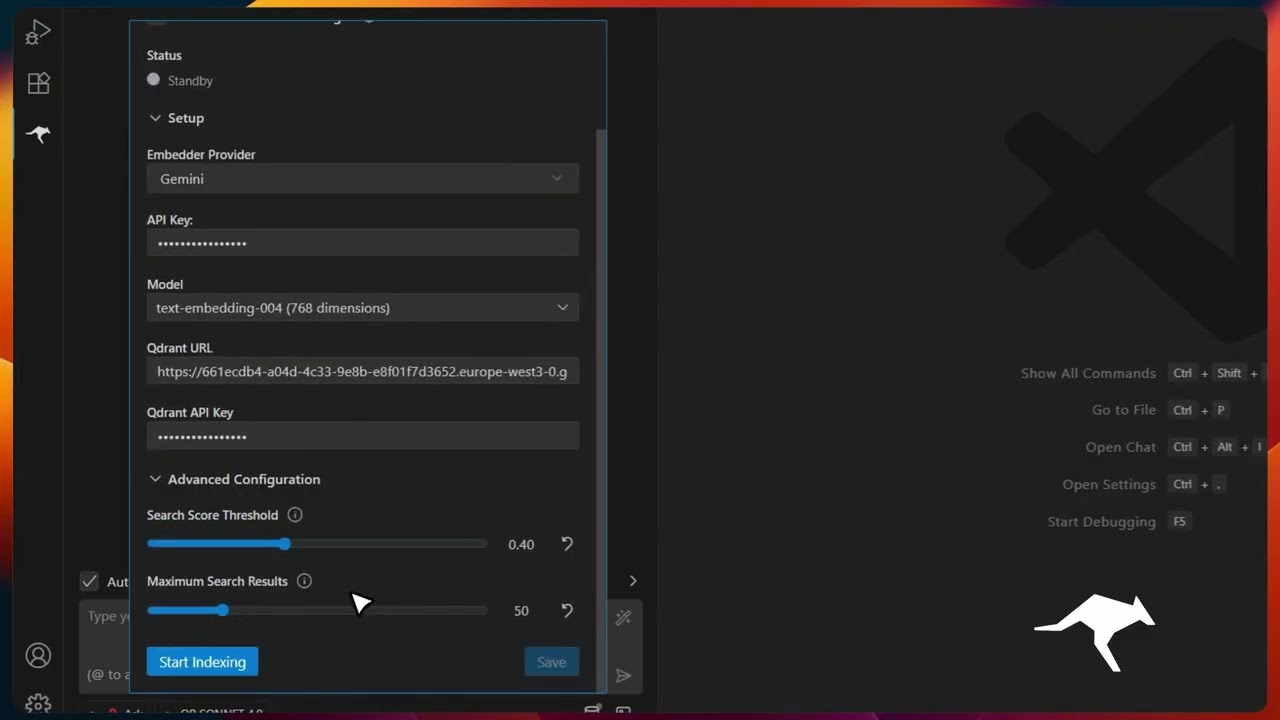 Codebase Indexing |
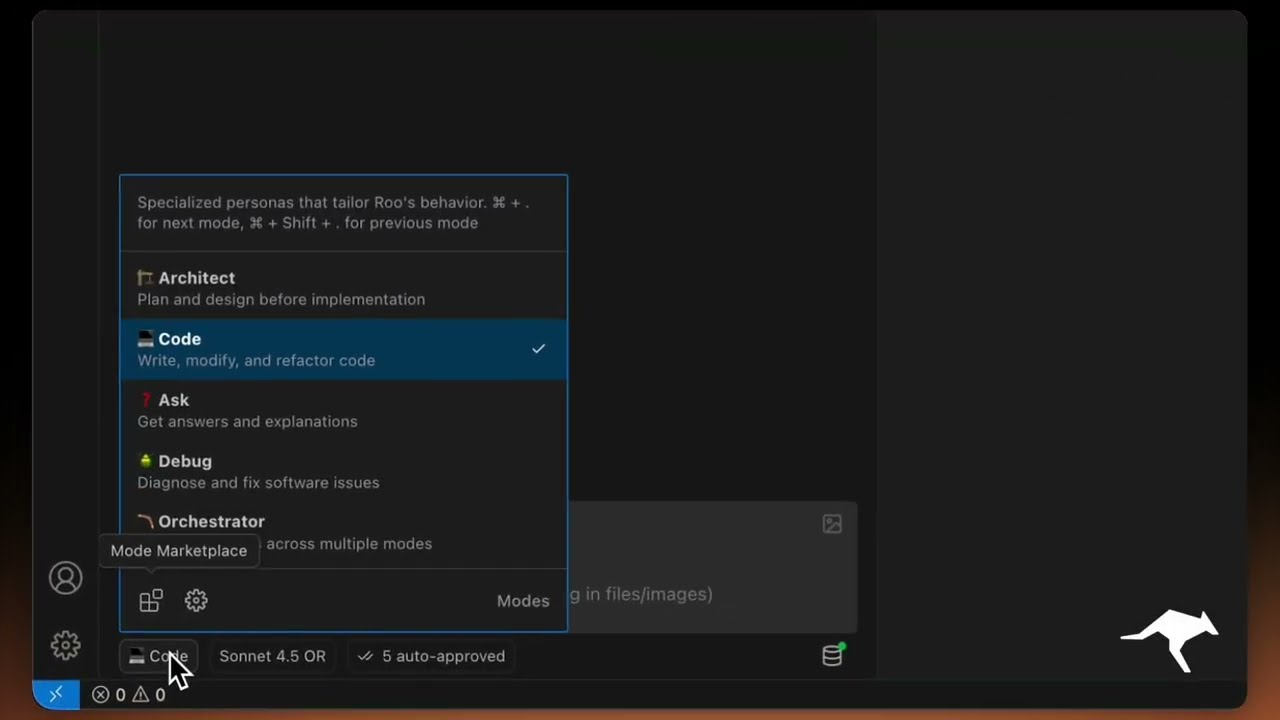 Custom Modes |
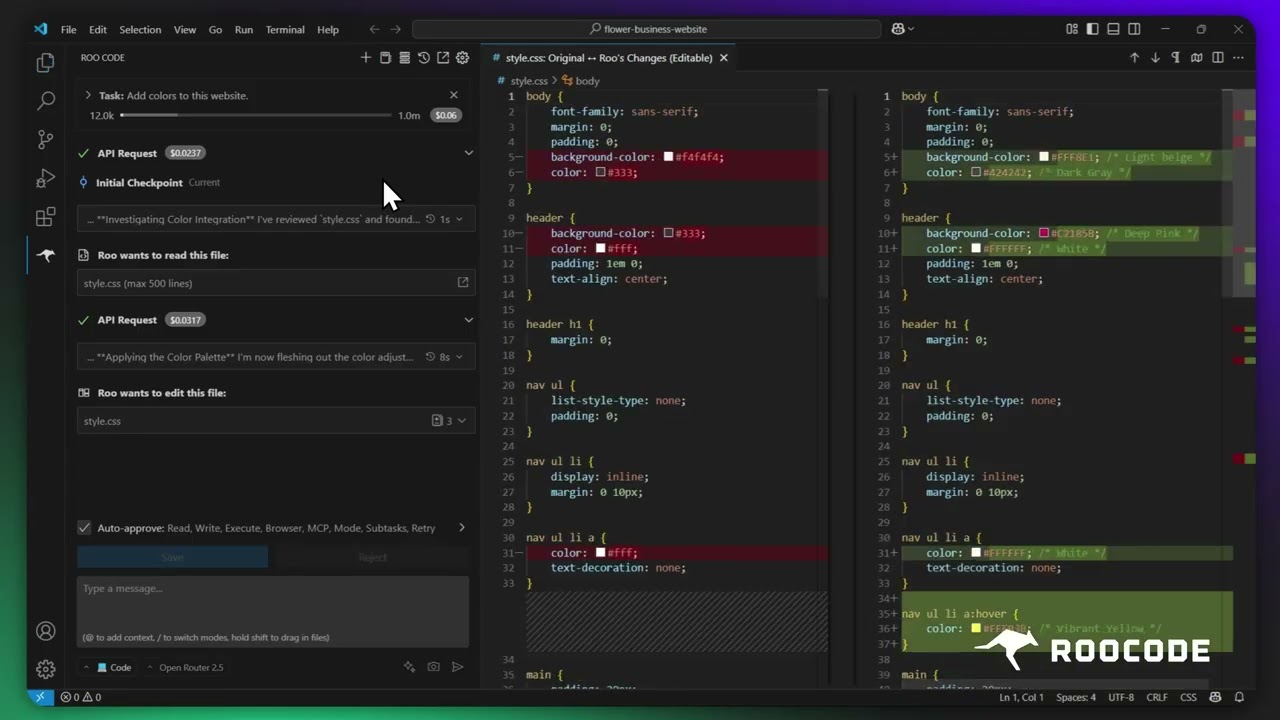 Checkpoints |
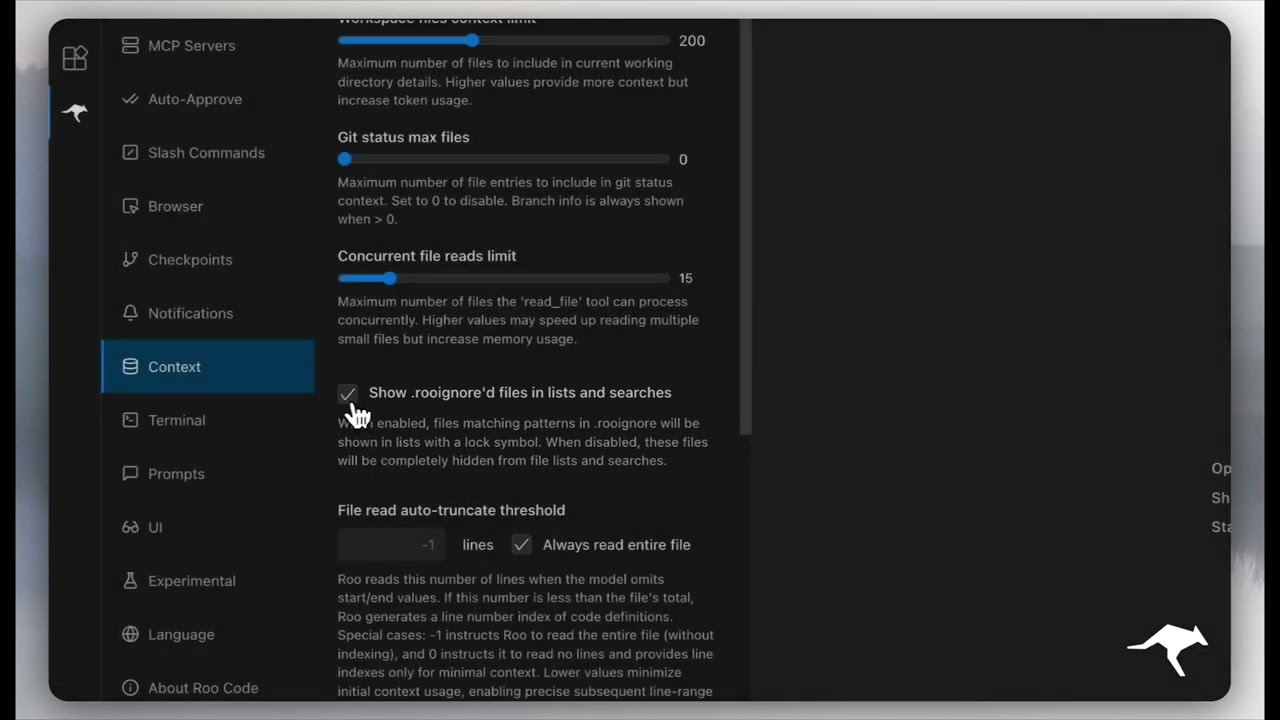 Context Management |
More quick tutorial and feature videos...
- Documentation: The official guide to installing, configuring, and mastering Zoo Code.
- YouTube Channel: Watch tutorials and see features in action.
- Discord Server: Join the community for real-time help and discussion.
- Reddit Community: Share your experiences and see what others are building.
- GitHub Issues: Report bugs and track development.
- Feature Requests: Have an idea? Share it with the developers.
- Clone the repo:
git clone https://github.com/Zoo-Code-Org/Zoo-Code.git- Install dependencies:
pnpm install- Run the extension:
There are several ways to run the Zoo Code extension:
For active development, use VSCode's built-in debugging:
Press F5 (or go to Run → Start Debugging) in VSCode. This will open a
new VSCode window with the Zoo Code extension running.
- Changes to the webview will appear immediately.
- Changes to the core extension will also hot reload automatically.
To build and install the extension as a VSIX package directly into VSCode:
pnpm install:vsix [-y] [--editor=<command>]This command will:
- Ask which editor command to use (code/cursor/code-insiders) - defaults to 'code'
- Uninstall any existing version of the extension.
- Build the latest VSIX package.
- Install the newly built VSIX.
- Prompt you to restart VS Code for changes to take effect.
Options:
-y: Skip all confirmation prompts and use defaults--editor=<command>: Specify the editor command (e.g.,--editor=cursoror--editor=code-insiders)
If you prefer to install the VSIX package manually:
- First, build the VSIX package:
pnpm vsix
- A
.vsixfile will be generated in thebin/directory (e.g.,bin/zoo-code-<version>.vsix). - Install it manually using the VSCode CLI:
code --install-extension bin/zoo-code-<version>.vsix
We use changesets for versioning and
publishing. Check our CHANGELOG.md for release notes.
Please note that Zoo Code does not make any representations or warranties regarding any code, models, or other tools provided or made available in connection with Zoo Code, any associated third-party tools, or any resulting outputs. You assume all risks associated with the use of any such tools or outputs; such tools are provided on an "AS IS" and "AS AVAILABLE" basis. Such risks may include, without limitation, intellectual property infringement, cyber vulnerabilities or attacks, bias, inaccuracies, errors, defects, viruses, downtime, property loss or damage, and/or personal injury. You are solely responsible for your use of any such tools or outputs (including, without limitation, the legality, appropriateness, and results thereof).
We love community contributions! Get started by reading our CONTRIBUTING.md.
Apache 2.0 © 2026 Zoo Code Org
Enjoy Zoo Code! Whether you keep it on a short leash or let it roam autonomously, we can’t wait to see what you build. If you have questions or feature ideas, drop by our Reddit community or Discord, or open an issue. Happy coding!